Introducing Raistlin Laplace

In this post, you meet Raistlin Laplace. You will hear more of him at a later time. Please find the Finnish version here.

NY_posterised

Raistlin Laplace has just received a diagnosis from his psychiatrist. It’s a sunny day of early spring, as he sits down on a bench in New York’s Central Park and opens an envelope. His thin lips hesitate upon the judgement held in his bony fingers: “Epistemological Hypersensitivity”. It had something to do with how patterns are distinguished from the midst of noise. Like how a radio tuned in the middle of two channels doesn’t tell much of the DJs’ music taste; too much noise, too little signal. The human brain is a signal detection machine without comparison, as it can detect satanic verses in backwards-played metal music or see Jesus in a dog’s anus (has happened). But Mr. Laplace’s problem was at odds with the one of those who seek secret codes in the bible. He was obsessed with avoiding randomness-created illusory patterns. The diagnosis made sense in a way, but he had long ago given up trust in things that made sense.

Raistlin spent his youth in a small town called Naples in southwest Florida. It had sounded aptly European to his French-Russian immigrant parents, who wanted to offer their only child a more tolerant environment from a less war-prone part of the world. It wasn’t immediately clear that Naples was, in fact, a red-neck village where parents spent most of their days commuting, and children in bloody fights with the youngsters of nearby villages.

Raistlin had always had a sickly appearance, although he was seldom ill. He had a feeble posture and pale complexion, combined with the contrast between his icy blue eyes and jet-black hair. This was more than enough to make the superstitious elderly whisper. Knowing this, and upon discovering the local library in elementary school, he realised he took great delight in the books found at the corner marked occultism. He devoured everything from shamanism to theosophy and new age. Sports—or, to that matter, anything else which interested other children—he couldn’t care less about. Having a hard time fitting in, he would’ve most wanted just to spend time alone with his books.

The first time his information universe collapsed was, when in junior high, he had to admit that the rituals and techniques of the occult-corner didn’t work as promised. Everything adults wrote wasn’t unerring; all information wasn’t knowledge. But the shock waned quickly and little did he know that this was only the beginning.

On a rainy New York day, 28-year-old Raistlin sealed the envelope containing a bankruptcy application of his startup company. He pondered on what had gone wrong. He had done everything right; read all the right books, followed the strategies of highly successful companies, listened to hundreds of hours of popular psychology-inspired sales training tapes, taken educated risks, and for years worked with a relentless, never-give-up attitude. At some point the money just run out and, as creditors breathed down his neck, more wasn’t coming. In the dim lighting of his studio apartment, Raistlin felt horror escalate. How could those writers, who so confidently spew out facts of the world, actually know how things truly worked? Were they really different than him, who—had any of the myriad small things gone differently—could now well be the CEO of a highly successful tech company?

He didn’t sleep that night. He watched an agonising replay of all those hours he had spent reading newspapers without learning anything about how the world actually worked. All the popular science news touting great new discoveries, all of which had later turned out to be premature. All the books written by those who thought their success was caused by their own actions and aptitude, instead of random occurrences of serendipity.

Two years later he only read peer-reviewed scientific journals. That is, until the discussion which followed mathematician-statistician John Ioannidis’ article “Why most published research findings are false” persuaded him of the fallibility of the scientific method (outside of physics, at least). The relationship between information and knowledge he had learnt about in junior high, began forming as an obsession: Raistlin wanted no more information, and he hungered for knowledge. Pure mathematics with it’s provable axioms finally offered just this, and our bony learning addict delved into it. By a stroke of luck and a relative’s recommendation, he ended up working in a bank. He vowed to avoid all information which wasn’t kosher; if the signal-to-noise ratio was low, the gates of his mind remained sealed.

This resulted in an unexpected problem: the more he aspired to isolate himself from “useless nonsense”, the more sensitive to it he became. On those few days he strolled outside, the shock headlines at newspaper stands turned his stomach to knots. Advertisements filled him with outrage. He also started avoiding social situations when he realised how easy it was for good stories to get stuck in his brain. He worked as a risk analyst, and didn’t want to start fearing airplanes just because some acquaintance of an acquaintance had experienced dread during an emergency landing. Compulsions—like fast repetition of names of old Russian mathematicians, when someone used anecdotes to advocate a position—got worse and eventually his worried employer steered him towards professional help.

Rays of intensifying sunlight warmed up Raistlin’s bench and whispered promises of summer to the people wandering about Central Park. Raistlin had promised his psychiatrist to begin participating in a therapy group. The anxiety meds he took had also started to kick in, which made him buy a newspaper from a nearby hot dog stand and even read a couple of pages. It didn’t feel as bad anymore, perhaps about as sensible as his diagnosis. The psychiatrist had explained that epistemological hypersensitivity meant anxiety stemming from the origin of knowledge. That there wouldn’t be a signal in the noise. Fear of realising, upon the moment of one’s death, that he had spent his life reacting to ghosts the mind saw in the noise, instead of real phenomena.

Some hours later, a young student walking a dog in the park, to her delight stumbled upon a pristine newspaper. She took it home and opened it in front of a bowl of cereal. At first glance, the paper looked untouched. Only after reading several articles, she noticed some very small but resolute handwriting. In the margins, someone had written: “Kolmogorov. Kolmogorov. Kolmogorov.

The myth of the magical “Because”

In this post I try to answer the call for increased transparency in psychological science by presenting my master’s thesis. I ask for feedback about the idea and the methods. I’d also appreciate suggestions for which journal it might be wise to submit the paper I’m now starting to write with co-authors. Check out OSF for the Master’s thesis documents and a supplementary website for analyses in the manuscript in preparation (I presented the design analysis in a previous post).

In my previous career as a marketing professional, I was often enchanted by news about behavioral science. Such small things could have such large effects! When I moved into social psychology, it turned out that things weren’t quite so simple.

One study that intrigued me was done in the 70’s, and has since gained huge publicity (see here and here, for examples). The basic story is, that you could use the word because to get people to do things, due to a learned “reason → compliance” link.

because20in20media

Long story short, I was able to experiment in a within-trial setting of a health psychology intervention. Here’s a slideshow adapted from what I presented in the annual conference of the European Health Psychology Society:


Things I’m happy about:

  • Maintaining a Bayes Factor / p-value ratio of about 1:2. It’s not “a B for every p“, but it’s a start…
  • Learning basic R and redoing all analyses in the last minute, so I wouldn’t have to mention SPSS 🙂
  • Figuring out how this pre-registration thing works, and registering before end of data collection.
  • Using the word “significant” only twice and not in the context of results.

Things I’m not happy about:

  • Not having pre-registered before starting data collection.
  • Not knowing what I now know, when the project started. Especially about theory formation and appraisal (Meehl).
  • Not having an in-depth understanding of the mathematics underlying the analyses (although math and logic are priority items on my stuff-to-learn-list).
  • Not having the data public… yet. It will be in 2017 the latest, but hopefully already this autumn.

A key factor for fixing psychological science is transparency; making analyses, intentions and data available for all researchers. As a consequence, anyone can point out inconsistencies and use the findings to elaborate on the theory, making accumulation of knowledge possible.

Science is all about predicting, and everyone knows how anyone can say “yeah, I knew that’d happen”. The most impressive predictions are those made well before things start happening. So don’t be like me, and pre-register your study before the start of data collection. It’s not as hard as it sounds! For clinical trials, this can be done for free in the WHO-approved German Clinical Trials Register (DRKS). For all trials, the Open Science Framework (OSF) website can be used for pre-registering plans and protocols, as well as making study data available for researchers everywhere.There’s also an extremely easy-to-use pre-registration site AsPredicted.

One can also use the OSF website as a cloud server to privately manage one’s workflow (for free). As a consequence, automated version control protects the researcher in the case of accusations of fraud or questionable research practices.

ps. If there’s anything weird in that thesis, it’s probably because I have disregarded some piece of advice from Nelli Hankonen, Keegan Knittle and Ari Haukkala, for whose comments I’m indebted to.

Analyse your research design, before someone else does

In this post, I demonstrate how one could use Gelman & Carlin’s (2014) method to analyse a research design for Type S (wrong sign) and Type M (exaggeration ratio) errors, when studying an unknown real effect. Please let me know if you find problems in the code presented here.

[Concept recap:]

Statistical power is the probability you detect an effect, when it’s really there. Conventionally disregarded completely, but often set at 80% (more is better, though).

Alpha is the probability you’ll say there’s something when there’s really nothing, in the long run (as put by Daniel Lakens). Conventionally set at 5%.

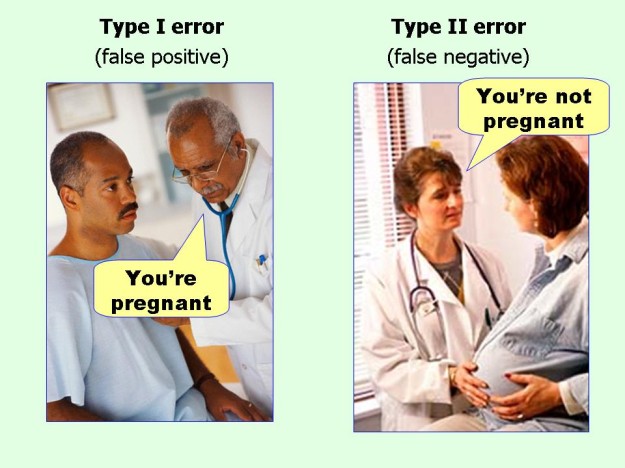
type-i-and-ii-errors1-625x468
Two classic types of errors. Mnemonic: with type 1, there’s one person and with type 2, there are two people. Not making a type 2 error is called ‘power’ (feel free to make your own mnemonic for that one). Photo source.

Why do we need to worry about research design?

If you have been at all exposed to the recent turbulence in the psychological sciences, you may have bumped into discussions about the importance of a bigger-than-conventional sample sizes. The reason is, in a nutshell, that if we find a “statistically significant” effect with an underpowered study, the results are likely to be grossly overestimated and perhaps fatally wrong.

Traditionally, if people have considered their design at all, they have done it in relation to Type 1 and Type 2 errors. Gelman and Carlin, in a cool paper, bring another perspective to this thinking. They propose considering two things:

Say you have discovered a “statistically significant” effect (p < alpha)…

  1. How probable is it, that you have in your hands a result that’s of the wrong sign?  Call this a Type S (sign) error.
  2. How exaggerated is this finding likely to be? Call this a Type M (magnitude) error.

Let me exemplify this with a research project we’re writing up at the moment. We had two groups with around 130 participants each, and exposed one of them to a message with the word “because” followed by a reason. The other received a succinct message, and we observed their subsequent behavior. Note, that you can’t use the observed effect size to figure out your power (see this paper by Dienes). That’s why I figured out a minimally interesting effect size of around d=.40 [defined by calculating the mean difference considered meaningful, and dividing the result by the standard deviation we got in a another study].

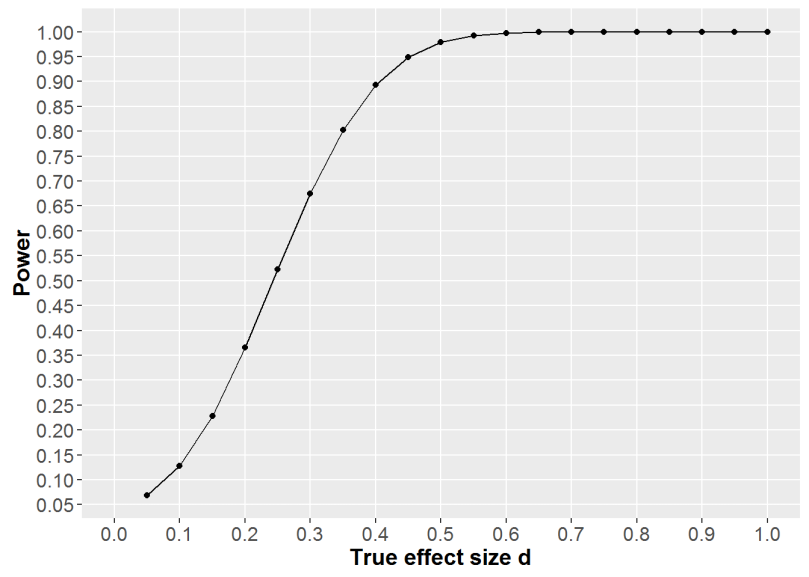
First, see how we had an ok power to detect a wide array of decent effects:

power

So, unless the (unknown) effect is smaller than what we care about, we should be able to detect it.

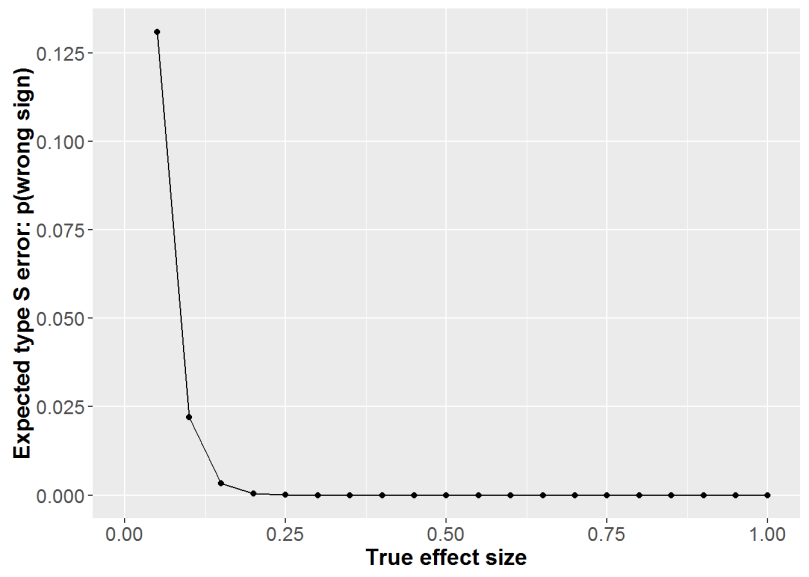
TypeS

Next, above we see that the probability we would observe an effect of the wrong sign would be miniscule for any effect over d=.2. This would mean it’d look like the succinct message worked better than the reason message, when it really was the other way around. typeM

Finally, and a little surprisingly, we can see that even relatively large true effects would actually be exaggerated by a factor of two!

Dang.

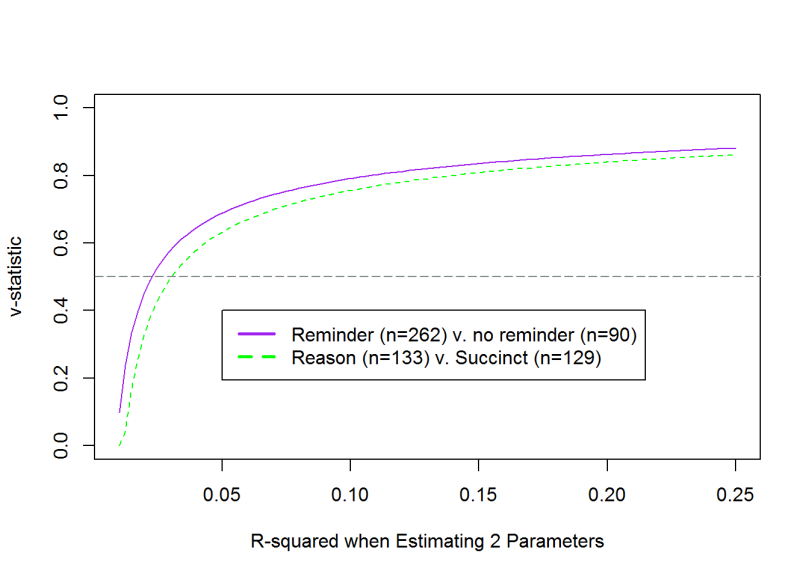
But what can you do, those were all the participants we could muster up with our resources. An interesting additional point is brought by looking at the “v-statistic”. This is the measure of how your model compares to random guessing. 0.5 represents coin flipping accuracy (see here for full explanation and the original code I used).

vstat

Figure above shows how we start exceeding random guessing at R^2 around 0.25 (d=.32 according to this). The purple line is in there to show how an additional 90 people help a little but do not do wonders. I’ll write about the results of this study in a later post.

Until then, please let me know if you spot errors or find this remotely helpful. In case of the latter, you might be interested in how to calculate power in cluster randomised designs.

Oh, and the heading? I believe it’s better to do as much of this sort of thinking, before someone looking to have your job (or, perhaps, reviewer 2) does it for you.

Welcome / Tervetuloa!

This is a blog about behaviour change science and complex systems in preparedness, health and well-being.

For research articles, see my Google Scholar profile. If you’d like to e-mail me about anything, please email matti.tj.heino @ this domain (i.e. mattiheino.com). Find me in LinkedIn.

Nota bene: I instruct an online course for the New England Complex Systems Institute, and am happy to respond to questions. Do reach out!

Latest posts

English:

Suomeksi:

All posts

English:

Suomeksi:

Bias, meditation and the pursuit of clarity

[Update: Short Twitter-discussion on the issue w/ Headspace’s Andy Puddicombe here]

Quick summary: In this post, I evaluate the effect of the “anchoring heuristic” on my meditation data by dabbling with Bayesian(ish?) model fitting. I also find that my perceived clarity is not improving with time. I ask for your favourite explanations. Markdown code for the analysis can be found here.

For a while now, I’ve been collecting data to keep me motivated with my daily meditation practice. This is the first time I took a sneak peek into it, just to see how much my assessments depend on the so-called anchoring effect.

Roughly speaking, the anchoring effect is said to be a cognitive bias, where people base (“anchor”) their estimates on unrelated previous information. For example, in one classic study, people were asked for the proportion of African countries in the United Nations after spinning a wheel of fortune to obtain a random number. Those who got a big number guessed a high proportion, and those who got a low number went for a low proportion.

hsplogo
This app helped me develop a sticking meditation habit a couple of years ago.

My meditation practice is 120 minutes a day, broken down into a combination of 30/60/90 minute blocks. One of the 30 minute blocks is a 20 minute Headspace session (the extra 10 minutes come from the time it takes to feel out and log the variables I’m interested in).

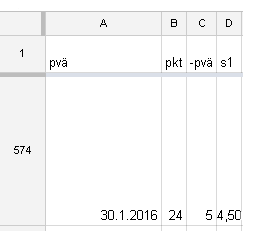
This is how my spreadsheet begins every day. There are, in total, ~45 columns, including pre- and post-meditation assessments of calm, reaction times (Stroop test) etc. I’ll write more about these if/when I find the time for analysis!
hspcorr


Column A is the date, column B is the “package”, or type of meditation, column C is the day within the package. There are 30 days per package, so column C is a number that runs from 1 to 30 for each package number. Finally, column D is my subjective sense of clarity, from 1 (completely unclear) through 5 (not clear nor unclear) to 10 (completely clear).

Now, because I jot down the clarity assessment right after the day number, I would expect higher day numbers to boost my clarity assessment because of the anchoring effect. Why? Because Kahneman, in his famous book Thinking Fast and Slow, proclaims:

[D]isbelief is not an option. […] You have no choice but to accept that the major conclusions of these studies are true. More important, you must accept that they are true about you. – Daniel Kahneman

Without going too deep into the sorry state of replicability in priming effects (anchoring seems robust, though), let’s see how this particular effect may have affected my assessments:
hspcorr2

D’oh! If anchoring was affecting my clarity assessment, the line in the plot should have gone up from left to right. It clearly does not.

[In technical blahblah: The plot above shows (slightly jittered) values for clarity for each day number and the Maximum A Posteriori (MAP) line. It’s basically linear regression with priors, and with this much data the priors don’t matter much. Darker shade hugging the line shows the 50% highest probability density interval (top 50% of most probable lines) and the lighter shade shows the 90% interval. Read more about priors here and learn everything you ever need to know about making inferences here]

I would have expected the slope of the line to be positive, maybe something like 0.15. Instead, the most credible (90%) interval for the slope of the line is from -0.0148 to 0.

What if the magic hides in row numbering?

If you look again at the picture of my spreadsheet in the beginning of this post, you’ll notice that left to the date cell, there’s the row number. Perhaps that’s where I tend to anchor at?

So let’s see how clarity changes with the running number of the row:

hspcorr3

Yay! At least now the slope is positive. Although, upon closer inspection, the 90% interval is from 0 to 0.0011. Which is pretty much zero.

Another thing this plot reveals, is that my clarity assessment hasn’t gone up during the past 500+ days. This might be because there has not been an effect (I wasn’t exactly a meditation newbie when I started). Alternatively, I may unconsciously keep shifting the scale (what I would have considered “clear” a year ago, now seems less so). What do you think?

And why am I not seeing an anchoring effect here, what am I missing?

Any thoughts?

Taking back the power (in cluster randomization)

In the right light, study becomes insight
But the system that dissed us
Teaches us to read and write

– Rage Against The Machine, “TAKE THE POWER BACK”

[DISCLAIMER 1: THIS POST MAY CAUSE DEATH BY BOREDOM IF YOU’RE NOT INVOLVED WITH INTERVENTION RESEARCH DESIGN]

Statistical power is the probability of finding an effect of a specified size, if it exists. It is of critical importance to interpreting research, but it’s amazing how little attention it has got in undergraduate statistics courses. Of course it can be argued, that up until recent years, statistics in psychology was taught by those who were effectively a part of the problem. I can’t recommend enough this wonderful summary of Cohen’s classic article about how psychology failed to take it seriously in the 20th century.

This doesn’t mean the problem is eradicated. In social psychology research, power still seems to be less than 50%. It gets worse in neuroscience: the median power is estimated to be around 20%. So, if an effect is real, you have a 1-in-5 probability of finding it with your test. If you still happen to find the effect, it most probably is grossly overestimated, because when an effect happens to look big just by chance, it crosses the p<0.05 threshold more easily. (See paper by John Ioannidis; “Why Most Discovered True Associations Are Inflated”.)

Once more: if your study is underpowered, you not only fail to detect possible effects, but also get unrealistic estimates when you do.

Recently, I’ve had the interesting experience of having to figure out how to do sample size calculations in a cluster-randomised setting. This essentially means that you’re violating the assumption of independent observations, because your participants come clustered in e.g. classrooms, and people in one classroom tend to be more like each other than people in another classroom.

It also pretty much churns your dreams [of simple sample size specification] to dust.

That’s probably the case, Research Wahlberg. But HOW MUCH more?! This intra-class correlation is killing me!

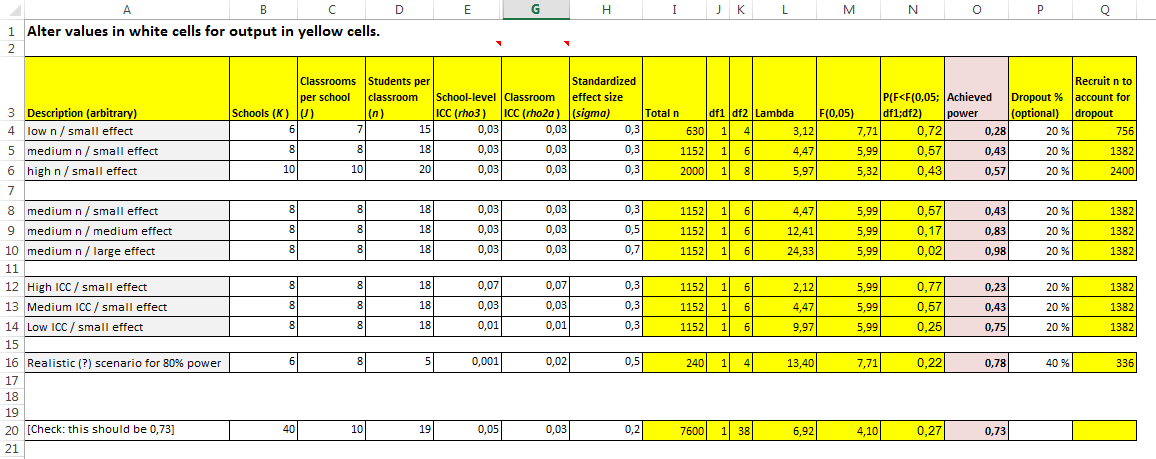
So, to make my life easier, I built a couple of Excel sheets that can be used by a simpleton like me. You can download the file from the end of this post. (note: the sheets contain “array formulas” that only work in Excel, so sadly no Openoffice version.)

I want to make it perfectly clear that I still know very little about power analysis (or anything else, actually) and made these as tools to help me out because my go-to statistician was too busy to give me the support I needed. Sources and justifications are provided, but it’s not impossible these calculations are totally wrong.

I’m guessing your friendly neighbourhood statistician, too, would rather help “see if your calculations are correct” instead doing your calculations for you. So I’m hoping you can use this tool to estimate the sample size, then talk to a statistician and let me know if he says you have corrections to make 🙂

[DISCLAIMER 2: ALWAYS CONSULT A STATISTICIAN BEFORE MOVING FORWARD WITH CALCULATED SAMPLE SIZES]

What’s in the sheets

Here’s what’s in the file:

2-level cluster randomization: sample size aide

2-level cluster randomization sample size aide

Use this sheet to calculate sample size for 2-level cluster randomization when you know power and a bunch of other stuff. Some links and guidance is included. Also includes two toys (the rightmost and the bottom yellow blocks) that give you optimistic estimates of whether your “discovery” is false. These are based on this paper. I highly recommend it if you want to make sense of p-values.

Find the ICC (intra-class correlation) in SPSS and R

ICC

One of the big boogiemen, to me at least, of the whole enterprise was the intra-class correlation (apparently, often used synonymously with “intra-cluster” correlation). I jotted down instructions that I wish I had when I began meddling with this stuff.

Power calculator for a 3-level cluster randomized design

3-level

Here’s the dream crusher. In the “Justifications…”-sheet you’ll find mathematical formulas and the logic behind the machine, but it’s not super obvious for us mortals. I managed to make it work in Excel by combining pieces of code from all over the internet; I’m hoping you don’t need to do the same.

Download the Excel-file HERE.

Have fun and let me know if you find errors! All other comments are of course welcome, too.

Defeating the crisis of confidence in science: 3 + 3 ideas

[Update 6. March 2016: new figure for the Bayesian RP:P + some minor changes]

The first thing you need to know about practical science is that it is not a miraculous (or often, even awesome) way to learn about the world. As put in the excellent blog Less Wrong, it is just the first set of methods that isn’t totally useless when trying to make sense of the modern world. Although problems are somewhat similar in all sciences, I will focus on psychology here.

One of the most important projects in the history of psychology was published in the journal Science in the end of August. In the “Reproducibility Project: Psychology”, 356 contributors tried to re-do 100 studies published in high-profile psychology journals (all in 2008). (You can download the open data and see further info here.) Care was taken to mimic the original experiments as closely as possible, just with many more participants for increased reliability.

The results? Not too flattering: the effects in the replications were only about half as big as in the original studies. Alexander Etz provides an informative summary in this figure from this blog about a recent paper:

rpp
If Bayes Factor (B) is somewhere between 1/10 and 10 (or, for example 1/3 and 3, if you have less strict evidence standards), you can’t make confident conclusions. Most of the replicated studies (the ones on the lower left corner) never contained much information in the first place!

The number of “successes” in different fields of psychology depends on how you count and what you include (for example, what you think counts as social or cognitive psychology). For social psychology, the success rate of replication was somewhere between 8% (3 out of 38; by Replication Index) and 25% (14 out of 55; the paper in Science). Even conceding that the scientific method is not perfect, as referred to in the beginning, this was not what I expected to see.

My thoughts and beliefs often torment the hell out of me, so I’ve learned to celebrate when they turn out to be false. Thus, I ended up informing people at Helsinki University’s discipline of social psychology by replicating a “Friday-cake-for-no-reason” from a month earlier by one awesome colleague:

Behold; the Replicake!

The messenger cake worked well in Helsinki, but unfortunately the news were too bitter a dish to many. The results raised several confused reactions from psychologists who refused to believe the sorry state of status quo. I like the term “hand-wringling” as a description, the loudest arguments being (in no specific order):

If you're a researcher in the psychological sciences, denial of troubles isn't a real option.
Don’t just sit there, go make the world a better place!
  1. The replicators didn’t know what they were doing.
  2. The studies replicated weren’t representative of the actual state of art.
  3. This is how science is supposed to work, no cause for alarm!
    1. … because some fields are doing even worse (e.g. replicability of cancer biology may be just 10%-25%, economics ~49%, psychiatry less than 40% etc.)
    2. … because non-replications are a part of the self-correcting nature of science.

Andrew Gelman answers these points eloquently, so I won’t go much deeper into them. Note also, that Daniel “Stumbling on Happiness” Gilbert & co. used these arguments in their much publicised (but unhappily, flawed) critique of the psychology’s replication effort.

Suffice it to say that I value practicality; claiming there is a phenomenon only you can show (ideally, when no-one is looking) doesn’t sound too impressive to me. What worries me is this: science is supposed to embrace change and move forward with cumulative knowledge. Instead, researchers often take their favourite findings to a bunker and start shouting profanities to whoever wants to have a second look.

Researchers take their favourite findings to a bunker and start shouting profanities to whoever wants to have a second look.

I think anyone who’s seen the Internet recognises the issue. Personally, I find it hard to believe that arguing can change things, so I’d rather see people exemplify their values by their actions.

Sometimes I find consolation in Buddhist philosophy, so here are some thoughts maybe worth considering when you need to amp up your cognitive flexibility:

1. “You” are not being attacked.

Things are non-self. Just as wishing doesn’t make winning the lottery more likely, a thought of yours that turns out to be ill-informed doesn’t destroy “you”. Your beloved ideas, whether they concern the right government policy, the right way to deal with refugees or the right statistical methods in research, may turn out to be wrong. It’s okay. You can say you don’t know or don’t expect your view to be the final solution.

When Richard Ryan visited our research group, I asked him when does he expect his self-determination theory to die. The answer was fast: “When it gets replaced by a higher-order synthesis”. He had thought about it and I respect that.

2. The business of living includes stress, but it’s worse if you cling to stuff.

Wanting to hold on to things you like and resist things you don’t is normal, but takes up a lot of energy. You might want to try not gripping so hard and see if it makes an actual difference in how long the pleasures or displeasure lasts. So; if your ideas are under fire, take a moment to think about what life would be without whatever it is being threatened.

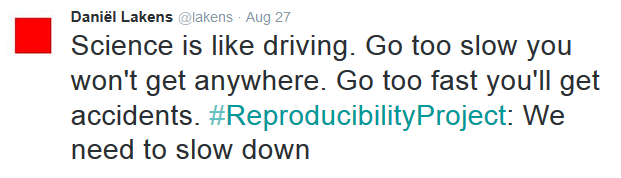
One of the big ideas in science is that we need big ideas. And, of course, big ideas are exciting. The problem is that most ideas – big or small – will turn out to be wrong and if we don’t want to be spectacularly wrong, we might want to take small steps at a time. As Daniel Lakens, one of the authors of the reproducibility project, put it:

lakens

3. Nothing will last (and this, too, will pass – but the past will never return).

Although calls for change in research practices have been made for at least half a century, this time the status quo is currently going away fast. It might be a product of the accelerating change we see in all human domains. It’s impossible to predict how things end up, but change isn’t going away. What you can do, is to try create the kind of change that reflects what you think is right.

For an example in research, take statistical methods, where the insanity of the whole “p<0.05 -> effect exists” approach has become more and more common knowledge in the recent years. Another change is happening in publishing practices; we are no more bound by the shackles of the printing press, which did serve science well for a long time. This means infinite storage space for supplements and open data for anyone to confirm or elaborate upon another researcher’s conclusions. Of course, the traditional publishing industry isn’t that happy about seeing their dominance crumble. But in the end, they too must change to avoid the fate of (music industry) dinosaurs in this NOFX-song from 15 years ago.

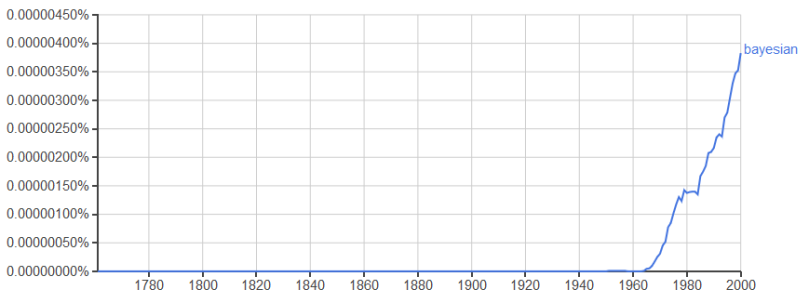
Mentions of
Change in action: Mentions of “Bayesian” in the English literature since the death of rev. Thomas Bayes in 1761. Click for source in Google Ngram. For an intro to Bayesian ideas, check out this or this.

Good research with real effects does exist!

The reproducibility project described above was actually not the first large-scale replication project in psychology. Projects called “Many Labs”, where effects in psychology are tested with different emphases, are just now beginning to bear fruit:

  • Many Labs 1 (over 6 000 participants; published fall 2014) picked 13 classic and contemporary effects and managed to replicate 10 consistently. Priming studies were found hard to replicate. Interestingly the fact that most psychology studies are conducted on US citizens didn’t have much of an effect.
  • Many Labs 2 (ca. 15 000 participants; expected on October 2015) studied how effects vary across persons and situations.
  • Many Labs 3 (around 3 500 participants; currently in press) studied mainly the so-called “semester-effects”. As study participants usually are university students, it has been thought they might behave differently in different points of the semester. Apparently they don’t, which is good news. The not-so-good news is that only three of the original 10 results was replicated.
  • Many Labs 4 (in preparation phase) will study how replicator expertise affects replicability, as well as whether involving the original author makes a difference.

These projects definitely will increase our understanding of psychological science, although suffer from some limitations themselves (such as the fact that e.g. really expensive studies get less replication attempts for practical reasons).

… It’s just really hard to tell what’s real and what’s not.

In the Cochrane Colloquium 2015, John “God of Meta-analysis” Ioannidis (the guy who published the 3000+ times cited paper Why Most Published Research Findings Are False) ended his presentation with a discouraging slide. He concluded that systematic reviews in biomedicine have become marketing tools with illusory credibility assigned to them.

The field I’m most interested in is health psychology. So when one of the world’s top researchers in the field tweeted that poorly performing meta-analyses are increasingly biasing psychological knowledge, I asked him to elaborate. Here’s his reply:

falko

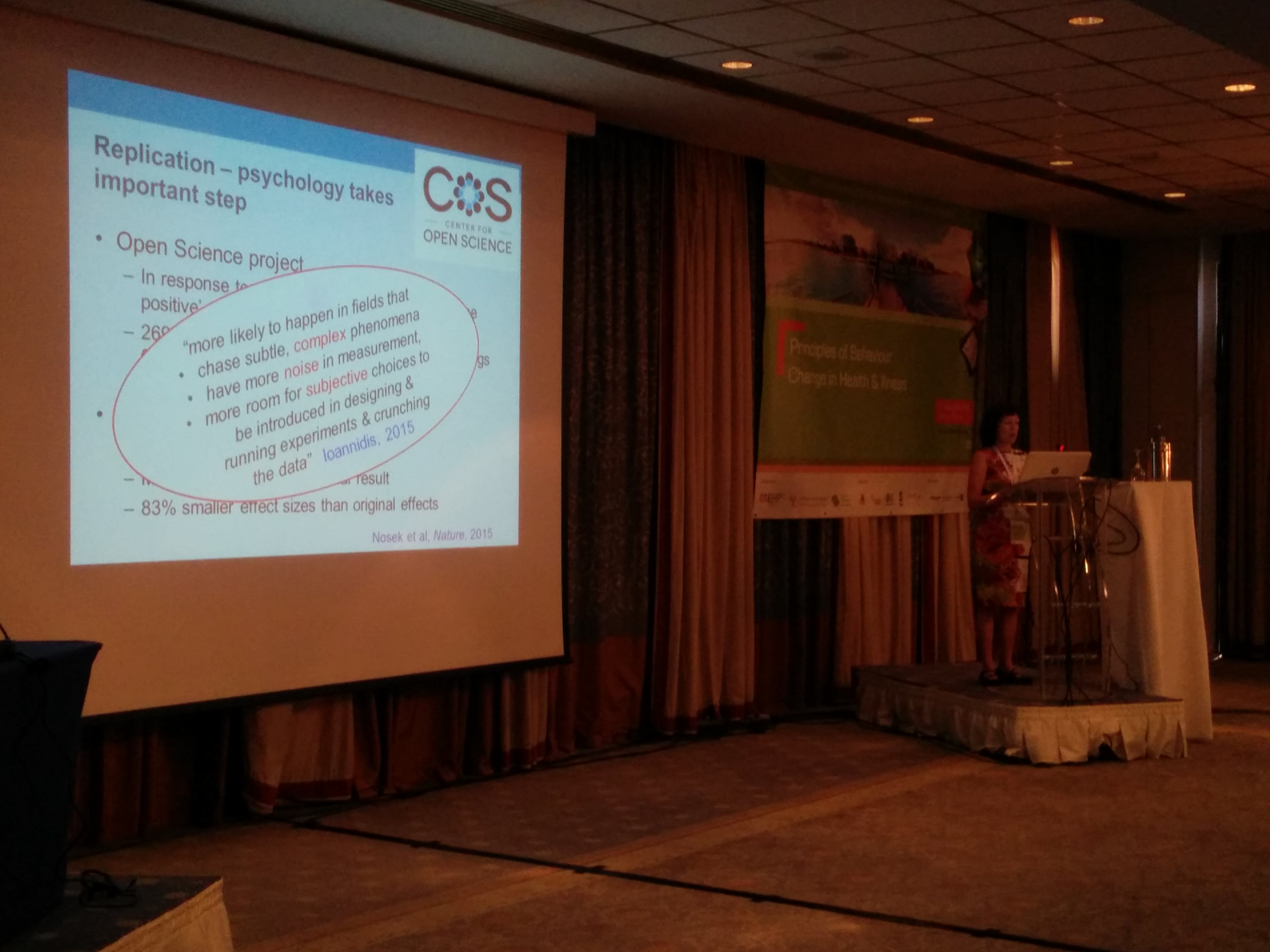
Susan Michie addressed the reproducibility problem in her talk at the annual conference of the European Health Psychology Society, with an emphasis on behavior change. She mostly addressed reporting, but questionable research practices are undoubtedly important, too.

Susan Michie presenting in EHPS 2015. Click to enlarge.

This became clear in the very same conference, when a PHD student told me how a professor reacted to his null results: “Ok, send me your data and you’ll have a statistically significant finding in two weeks”. I have hope that young researchers are getting more savvy with methods and more confident that the game of publishing can be changed. This opens the door for fraudulent authority figures to exit the researcher pool like Diederik Stapel – by the hands of their students, instead of a failed peer-review process.

“Ok, send me your data and you’ll have a statistically significant finding in two weeks”.

– a professor’s reaction to null results

Conclusion

Based on all the above, here’s what I think makes science worth the taxpayers’ money:

  1. Sharing and collaborating. Not identifying with one’s ideas. Maybe openness to the possibility of being wrong is the first step towards true transparency?
  2. Doing good, cumulative research [1], even if it means doing less of it. Evaluating eligibility for funding by the number of publications (or related twisted metrics) must stop. [2]
  3. Need to study how things can be made better, instead of just describing the problems. Driving change instead of clinging to the status quo!

[1] The need for better statistical education has been apparent for decades but not much has changed… Until the 2010s.

[2] See here for reasoning. (Any thoughts on this alternative?)

Työmarkkinoiden uudet vaateet

Arvioiden mukaan Euroopan alueella palvelutyöpaikkojen – koskivat ne sitten B2B-konsultointia tai vanhustyötä – suhteellinen osuus on jatkuvassa kasvussa. Tämän kasvun myötä myös työntekijöiltä vaaditut taidot ovat muutoksessa; ongelmien ratkaisuprosessia harvemmin enää voidaan pilkkoa tarkasti määritellyiksi, ennalta tiedossa oleviksi askeliksi. Tarvitaan siis yhä enemmän sellaisia taitoja, jotka auttavat luovimaan epävarmuuden keskellä.

EU:n raportissa “The top 10 European skills for competitiveness” tunnistettiin kymmenen kriittistä taitoa tulevaisuuden työelämässä menestymiselle. Lista on pitkä ja voi kuulostaa sanahelinältä, joten olen ajatusviivan jälkeen pyrkinyt avaamaan jokaista kohtaa oman näkemykseni mukaan. Jos sinua kiinnostaa pelkästään asian ydin, löydät kirjoituksen lopusta oman kolmen kohdan tiivistelmäni.

  1. Kommunikaatio
    • Ole avoin palautteelle ilman ennakkoluuloja – kovankaan kritiikin kohde ei ole “sinä” kokonaisuutena, vaan jokin toimintatapa tai jopa (kehitettävä) taito.
    • Kunnioita muiden asenteita ja mielipiteitä – niin kauan kuin niistä ei koidu vahinkoa toisille.
    • Anna muille palautetta – mutta älä tavalla, josta et itse pitäisi.
    • Ole suvaitsevainen vieraita tapoja ja kulttuureja kohtaan – älä kuitenkaan suvaitse ihmisarvoa alentavaa käytöstä.
    • Tarjoa omia ajatuksiasi, harjoittele selkeää ulosantia – ei kukaan muukaan tiedä täsmälleen oikeaa vastausta tosimaailman ongelmaan (tai sitten he eivät vain tiedä, etteivät tiedä).
  2. Suunnittelu
    • Ennakoi toimintojen etenemistä ja vaadittavia resursseja – suojaa suunnitelmasi täystuhon varalta, mutta älä ylisuunnittele (ks. tämä teksti varautumiseen liittyen)
    • Määrittele asioiden tärkeysjärjestys – mutta huomioi, ettei käytännön elämässä voi tietää varmuudella järjestyksen oikeellisuutta.
    • Jaa ja levitä eteenpäin tehtäviä ja resursseja – päästä irti, äläkä yritä tehdä kaikkea itse.
  3. Ristiriitatilanteiden hallitseminen
    • Toimi välittäjänä konfliktitilanteissa – tällöin ainakin yhdellä osapuolella on järkeä päässä.
    • Ole reilu ja objektiivinen ristiriitoja selvitettäessä – älä ajaudu välienselvittelyyn ilman hyväntahtoista asennetta.
    • Opi hallitsemaan stressiä ristiriitatilanteissa – niin omaasi kuin toistenkin.
  4. Avoimuus muutokselle
    • Aloita muutostyö itse, kun se on tarpeen – muutos on jatkuvaa ja vain sitä ohjaamalla teet maailmasta vähän enemmän itsesi näköisen.
    • Sopeudu muuttuvaan ympäristöön sekä ulkoisesti että sisäisesti – sopeutuminen voi olla myös uuden muutosprosessin käynnistämistä. Pahin virhe on passiivisuus; ympäristö ei spontaanisti noudata toiveitasi!
    • Kannata uusia lähestymistapoja, aloitteita, menetelmiä ja teknologioita – muista kuitenkin myös se, että vanhat toimintatavat yleensä elävät uusia pidempään.
  5. Päätöksenteko
    • Arvioi päätösten seurauksia ja riskejä, sekä odotettuja hyötyjä ja kustannuksia – mutta muista, että tulevaisuus yllättää aina ja täsmälliset arviot aliarvioivat tilanteen sisältämän epävarmuuden.
    • Tee hyviä päätöksiä monimutkaisissa tilanteissa – helpommin sanottu kuin tehty? Apua saattaa löytyä näistä teksteistä.
    • Esitä loogisia, perusteltuja ja rakentavia kriittisiä kommentteja – kyseenalaista siis, mutta tee se fiksusti.
    • Huomioi luovien päätösten merkitys epätavallisissa tilanteissa – ja muista, että suurin osa tilanteista on nykyään “epätavallisia”.

      Koita kestää – vielä viisi kohtaa jäljellä!
  6. Yhteistyö
    • Vaali sitoutumista ja ryhmähenkeä – toimi kaikissa tilanteissa esimerkkinä; niin, kuin haluaisit muiden toimivan.
    • Kannusta ja helpota yhteistyötä ryhmätyöskentelyssä – ole aktiivinen toisten auttamisessa.
    • Työskentele muiden kanssa saavuttaaksesi tavoitteita – edes renessanssin nerot eivät toimineet täysin omissa oloissaan.
  7. Joustavuus
    • Ota huomioon toisten asenteet ja näkökulmat – ja tee se selväksi.
    • Ymmärrä toisten asemaa ja asetu siihen – kukaan ei ole tahallaan paskiainen.
  8. Strateginen ajattelu
    • Pidä mielessäsi selkeä kuva tulevaisuudesta – edes siinä määrin, millaisten arvojen haluaisit nähdä toteutuvan käytännössä.
    • Määrittele tavoitteet selkeästi – on avuksi, jos ihmiset tietävät, mitä pyritään saamaan aikaiseksi…
    • Punnitse yhteisöäsi tai yritystäsi suhteessa sen ulkoiseen ympäristöön – et koskaan toimi tyhjiössä.
  9. Aloitekyky
    • Etsi oma-alotteisesti uusia haasteita ja aktiviteetteja – näin laajennat toimintarepertuaariasi, ja taidoistasi jokin saattaa (usein tuurin kautta) osoittautua uskomattoman hyödylliseksi.
    • Etsi ja tunnista aktiivisesti mahdollisuuksia tavoitteiden saavuttamiseksi – älä vain jumiudu siihen, mitä sinulle on kerrottu.
    • Etsi aktiivisesti uutta informaatiota/ennakkotapauksia – uusia ratkaisumahdollisuuksia syntyy joka päivä.
    • Suhtaudu työhön energisesti ja päättäväisesti – tämä todellisuus on sinulle mieluisempi kuin se, jossa et tee työtäsi (ja siten esim. olet rahaton). Se on siis oma valintasi. Käytä tilanne parhaalla tavalla hyödyksesi.
  10. Oppimisen edistäminen
    • Paranna jatkuvasti käyttäytymismallejasi – kokeile vaikka unilateraalista sekasortoaltruismia päivän verran.
    • Paranna jatkuvasti ammatillista tietotaitoasi – tällöin itsellesi mieleisen muutoksen johtamisesta tulee helpompaa.
    • Pyri oppimaan enemmän kuin kukin tilanne vaatii – älä tyydy selviytymiseen.
    • Opi omasta kokemuksestasi – epäonnistuminen on vain palautetta: löydä tilanteen opetus.

Siinäpä nuo. Monet kieltämättä voivat kuulostaa konsulttilöpinältä, mutta peukalosääntöinä nämä kymmenen työelämätaitoa sovellusehdotuksineen toiminevat tyhjää paremmin.

Tässä vielä lupaamani kolmen kohdan tiivistelmä (tärkeysjärjestyksessä):

  1. Älä ole paskiainen.
    • Jos ajattelet, että joku saattaa pitää sinua paskiaisena, mieti hyvin tarkasti, voisiko kyseessä olla ylpeytesi luoma harha (jolloin saatat todellisuudessa olla paskiainen). Voit myös käyttää tätä muumiontunnistustaktiikkaa.
  2. Tiedosta, ettet oikeastaan voi olla varma mistään.
    • Jos et ole jumala, on aika hyväksyä maailman ennustamattomuus.
    • Kun laajennat vaihtoehtopalettiasi (esim. kehittämällä raportissa mainittuja taitoja), lisäät selviytymismahdollisuuksiasi (ks. tämä teksti adaptoitumisesta).
  3. Toimi.
    • Jos kohdat 1. ja 2. ovat kunnossa, sinun tarvitsee enää pitää huoli siitä, että maailma muuttuu paremmaksi paikaksi. Tee jotain. Luotan sinuun.

Tuhoutumattomuuden tiellä: henkinen kriisinkestävyys

Tuhoutumattomuuden tiellä -juttusarjassa tarkastellaan keinoja shokeista selviytymiseen.

Varoitus: mikäli a) olet luonteeltasi huoleton ja sinun on helppo sopeutua äärimmäisiin tilanteenmuutoksiin, ja/tai b) pääasiallinen tapasi selviytyä elämästä on olla ajattelematta ikäviä asioita, tämä kirjoitus tuskin palvelee hyvinvointiasi.

Turvallisuuskomitea järjesti 18.5.2015 kutsuvierasseminaarin aiheella henkinen kriisinkestävyys (tiivistelmää seminaarista ja Martti Ahtisaaren puhe kokonaisuudessaan täällä). Pääsin tilaisuudessa osallistumaan mielenkiintoiseen keskusteluun kriiseistä selviytymisestä ja niihin varautumisesta.

Psykologi, avustustyöntekijä Ferdinand Garoff kertoo kriisin vaiheista. Missä kohdassa uskot yksilöllä olevan eniten vaikutusmahdollisuuksia?

Kansallisella tasolla Puolustusvoimat määrittelee henkisen kriisinkestävyyden näin: “Henkisellä kriisinkestävyydellä tarkoitetaan kansakunnan kykyä kestää turvallisuustilanteiden aiheuttamat henkiset paineet, selviytyä niiden vaikutuksilta ja nopeuttaa kriiseistä toipumista”. Yhteiskunnan turvallisuusstrategian kolme tehtävää ovat opetustoimen ylläpito, kulttuuri-identiteetin vaaliminen (mm. muinaismuistoja suojelemalla) ja hengellisten palveluiden turvaaminen (mm. kansankirkon toiminnan ylläpito).

Tässä kohtaa mieleni tekee älähtää, sillä maallistuneelle yksilölle ei viimeisistä tunnu paljoakaan iloa koituvan. Ymmärrän kuitenkin, että kriisin iskiessä kansallisella tasolla, yhteenkuuluvuuden tunne ja uskonto auttavat monia. Silti kysymys herää siitä, millainen voisi olla sekulaarisen yksilön oma turvallisuusstrategia, ja kuinka henkiseen iskunkestävyyteen voisi vaikuttaa silloin, kun asiat ovat vielä hyvin (lue: hallittavissa)? Kysymys ei ole uusi:

“Onnekkaimmatkin meistä taajaan kohtaavat kurjuutta ja vakavia vastoinkäymisiä elämän taipaleella; mielen vahvistamisen tällaisia epäonnen iskuja vastaan tulisi olla  elämämme ensisijaisista tutkimuskohteita ja pyrkimyksiä.”

Thomas Jefferson, 1763

Olen eräässä aiemmassa kirjoituksessa esitellyt adaptiivisen maaston käsitteen, perustellen monipuolistumisen ja jatkuvan uudistumisen lisäksi varautumisen olevan välttämätöntä selviytymiselle. Mutta kuinka varautua odottamattomaan?

2000-luvun länsimaissa esimerkiksi Jeffersonin aikaa riivanneet taudit ovat entistä harvinaisempia, mutta omassakin perhe- ja ystäväpiirissäni menetyksiä ovat jo aiheuttaneet mm. auto-onnettomuudet, syöpäkasvaimet, sydän- ja verisuonitaudit, katuväkivalta, työuupumus ja masennus. Lisäksi keskimääräiselle ihmiselle käy lukemattomia läheltä piti -tilanteita, joista suurimmasta osasta hän ei edes ole tietoinen; syöpäsolu lakkaakin jakautumasta, humalainen kuski kaasuttaa punaisia päin viisi minuuttia sen jälkeen, kun olet ylittänyt suojatien, työpaikan konkurssi estyy, orastava kansainvälinen konflikti ratkaistaan neuvotteluin.

Sivuhuomio: ei muuten ole syytä uskoa, että väkivaltaisten konfliktien määrä olisi laskussa, päin vastoin: on arvioitu, että yli 10 000 kuolonuhria vaativa sota on globaalisti kolmisen kertaa todennäköisempi, kuin miltä se edellisen 70:n vuoden perusteella tuntuu.

Tieteellinen tieto siitä, mikä ihmisen saa selviytymään ja jopa kasvamaan trauman seurauksena, on laajaa mutta yllättävän heikkolaatuista [1], ja tutkijoita onkin kehotettu korvaamaan määrää laadulla [2] (maksumuuriton johdanto traumanjälkeisestä kasvusta tehtyyn tutkimukseen täällä).

Esittelen siis länsimaisen psykologian pohdintojen sijaan alla kolme itselleni mieluista, itämaisesta filosofiasta peräisin olevaa ehdotusta kriisinkestävyyden kehittämiseen. Jaottelen ne kolmeen eri “riskitasoon” sen mukaan, kuinka mahdollisena pidän niiden soveltamisesta juontuvia ei-haluttuja sivuvaikutuksia.

Riskitaso 1: Harjoita suhtautumistapaasi

Buddhalaisessa mielenfilosofiassa puhutaan “kahdesta kohteensa läpäisevästä nuolesta”. Mieltä järkyttävä tapahtuma on ensimmäinen nuoli; tämä on usein hallitsemattomissa. Toinen nuoli iskee meihin, kun jäämme miettimään, millä kaikilla tavoin tapahtuma olikaan harmillinen. Vaikka voisimmekin väistää jälkimmäisen nuolen, usein jäämme typerinä kiroamaan kohtaloamme.

Toisenlaista näkökulmaa kuvastaa tämä (klassista kiinalaista tarinaa mukaileva) kertomus:

Olipa kerran Martti Maanviljelijä. Eräänä aurinkoisena päivänä Martin kyntöhevonen päättää vaihtaa alaa ja karata aitauksestaan. Martin naapurit tästä kuultuaan tulevat esittämään surunvalituksiaan; “kuinka harmillinen tapahtuma!”. Martti tähän toteaa tyynesti “niin, suottaapi olla”. Seuraavana päivänä kyntöhevonen palaa, tuoden mukanaan kolme villihevosta (kyllä, vielä oli villihevosia). Naapurit ihmettelevät äimän käkenä, “onpas upea tuuri!”, mihin Martti taas toteaa “niin, suottaapi olla”.

(Kuvalähde ja alkuperäistarina)

Kuinkas käykään, seuraavana päivänä Martin poika – juuri ennen yliopiston humanistisen tiedekunnan pääsykokeita – katkaisee kirjoituskätensä pudottuaan kesytyshommissa hevosen selästä. “Kävipäs kurjasti!”, naapurit päivittelevät taas, mihin Martti jälleen “niih, suottaapi olla”. Sairaalassa Martin poika tapaa kauniin lääkäriopiskelijan, rakastuu ja päättää itsekin opiskella lääkäriksi. Arvannet naapurien ja Martin välisen keskustelun.

Tarinan opetus? On ylimielistä kuvitella tietävänsä, ovatko jonkin tapahtuman seuraukset hyviä vai huonoja. Henkilökohtaista tragediaa yhtään vähättelemättä, jopa tieto siitä, että sairastat kuolemaan johtavaa tautia, saattaa aiheuttaa paljon hyvää ympärilläsi (kun ystäväsi alkavat ajattelemaan elämän rajallisuutta ja sitä, kuinka he oikeastaan haluavat omansa viettää, ties millainen dominovaikutus siitä voi syntyä).

Tämä ei siis tarkoita, että asioihin pitäisi suhtautua etääntyneesti tai väliinpitämättömästi: jos emme kerran voi tietää, mitä jostain seuraa, kannattaisiko odottaa siitä seuraavan aina jotain hyvää? Hyvien seurausten arvuuttelu toimii myös kätevänä luovuusharjoitteena, mutta kannattaa miettiä, kuinka suuren osan elämästään haluaa käyttää tuntemattoman tulevaisuuden spekulointiin (esim. käsillä olevan hetken kokemisen sijaan, ks. seuraava osio).

Sivuhuomio: joillekin ihmisille on helpottavaa ajatella kaikilla tapahtumilla olevan tarkoituksensa. Itse en tällaisesta ajattelutavasta välitä (suhtautumiseni ns. teodikea-ongelmaankin tiivistyy tässä sarjakuvassa); mutta jos se jollekulle toimii, niin mikäs siinä.

Riskeistä

Tässä kuvailtuun suhtautumistavan harjoittamiseen ei juurikaan liity riskejä, kunhan muistaa, että tulevien (ei menneiden) tapahtumien todennäköisyyksiin voi usein vaikuttaa.

Ensimmäinen nuoli: työpaikan kahvinkeitin ilmoittaa eräänä perjantai-iltapäivänä kriisin alkaneen. Toinen nuoli: itku ja hammasten kiristys?

Riskitaso II: Opettele kohtaamaan elämä kokonaisuudessaan

Bhikkhu Sumedhan [3] mukaan buddhalainen näkökulma kipuun, stressiin ja sairauteen tiivistyy siihen, että toimitaan moraalisesti ja opitaan ymmärtämään omaa mieltä. Ymmärrys taas rakentuu sellaisen tarkkailun avulla, jossa mielen toimintaa seurataan sivustakatsojana ja opitaan päästämään ajatuksista irti (esimerkiksi hengitykseen keskittyen).

Teoriana on, ettei kipu (ensimmäinen nuoli) aiheuta mielen häiriintymistä, vaan halu päästä kivusta eroon (toinen nuoli). Shinzen Youngia mukaillen; “kärsimys = kipu x ketutus”. Kun kipu opitaan tuntemaan mahdollisimman hyvin ja lopetetaan vastaan pyristeleminen, se ei enää tuota samanlaista kärsimystä, kuin mitä se aikaisemmin aiheutti. Itse olen pärjännyt työmatkat takitta viimeiset kolme talvea tätä tekniikkaa soveltaen (mikä nyt lähinnä tarkoittaa vain sitä, ettei se ole mahdotonta, eli tuskin on kovin yllättävää).

Teoriaan kuuluu siis, ettei elämästä tule valikoida osia niin, että on läsnä miellyttävien asioiden kanssa, epämiellyttäviä vältellen. Sen sijaan sekä miellyttävät, että epämiellyttävät asiat tulisi kohdata mahdollisimman kokonaisvaltaisesti. Pääasiallinen keino tähän on meditaatiolla saavutettava hyväksyvä läsnäolo – ideana on kokemusten salliminen sekä sen ymmärtäminen, etteivät asiat muutu toivomalla tai haluamalla (sen sijaan, muutos havaittavassa maailmassa vaatii toimintaa).

Riskeistä

Itsetuntemuksen lisäämisestä (tai kyvystä rauhoittaa itsensä) meditaation avulla tuskin on haittaa. Kuitenkin kaksi asiaa kannattaa huomioida:

1) Kivunhallinnan saavuttaminen saattaa viedä vuosikymmeniä, eikä ole takeita (no, milloin niitä koskaan olisi) siitä, että lumevaikutuksen lisäksi tuloksia edes tulee. Itse en voi vielä vuosikausien harjoituksen jälkeenkään sanoa selkeästi hyötyneeni meditaatiosta, tai edes jollain tapaa edistyneeni harjoituksessa. Ei sillä, että se olisi saanut minut lopettamaan.

2) Eräässä aiemmassa kirjoituksessa mainitsemani “pimeän yön” kokemukset voivat olla hyvinkin rankkoja harjoituksen edetessä (jos tiedät, mitä tarkoitan, Facebookista löytyy nykyään “Dark Night Support Group“-niminen ryhmä, josta saattaa olla hyötyä).

Jos meditaatiota haluaa kokeilla, alkuun pääsee maksutta esimerkiksi calm.com:n harjoitteilla tai (erit. kipu- ja stressikontekstissa) lataamalla tämän lyhyen kirjasen.

Riskitaso III: Rakastu pysymättömyyteen

Kerron toisen tarinan, josta pidän:

Yhdysvaltalainen psykoterapeutti Mark Epstein matkusti 70-luvulla thaimaalaiseen metsäluostariin tavatakseen nimekkään meditaatio-opettaja Ajahn Chahn. Kysyttyään tältä tämän opetuksen ytimestä, tuimakasvoinen munkki hymyili ottaen vesilasin käteensä. “Näetkö tämän maljan? Minulle se on jo rikki. Pidän siitä kovin; se pitää vettä ihailtavasti ja joskus heijastaa auringonvalossa kauniita kuvioita. Jos napautan sitä, siitä lähtee heleä ääni. Mutta kun laitan tämän lasin pöydälle ja tuuli tai oma kyynärpääni pudottaa sen pirstaleiksi lattialle, sanon ‘Tietenkin’. Kun ymmärrän, että lasi on jo rikki, jokainen hetki sen kanssa on arvokas.”

Ei ole mitään, mikä ei helpottuisi tottumuksen voimasta. Siispä tutustuessani pieniin harmeihin, minun pitäisi oppia kärsivällisesti hyväksymään suuremmatkin harmit. (Shantideva)

Onko tällainen näkökulma masentava, negatiivinen, toivoton? On, jos joko luulemme asioiden ympärillämme olevan ikuisia, tai pyrimme välttämään pysymättömyyden ajattelemista… Missä tapauksessa minulla on huonoja uutisia; jokainen ihminen vanhenee, sairastuu ja lopulta kuolee.

Väittäisin, ettei (varsinkaan länsimaissa) suuri osa ihmisistä edes huomaa olevansa terve, nuori ja hyvinvoiva ennen kuin nuo asiat hänen elämästään häviävät. Mutta kuvittele hetki; puhuisitko eri tavalla jos tietäisit, että ystävyys- tai parisuhteesi on juomalasin tavoin jo sirpaleina? Tai jos olisit vain vakuuttunut, että kauniit muistoesineesi rikkoutuvat tai jonain päivänä et enää saa lämmintä vettä suihkussa – täyttäisikö se sinut kiitollisuudella ja arvostuksella, vai murehtimisella ja epätoivolla? Jälkimmäisessä tapauksessa annos kypsää hyväksyntää saattaa auttaa.

Riskeistä

Tällainen ajattelu saattaa aiheuttaa toivottomuutta, masennusta, tai halua vieraannuttaa itsensä kaikesta, jonka saattaa joskus menettää. Eksistentiaalinen ahdistus ei koskaan tunnu kovin mukavalta, ellei siihen löydä oikeaa suhtautumistapaa (edelliset osiot saattavat auttaa). Teoriassa kuitenkin elämän väliaikaisuuden tiedostamalla pääsemme tilanteeseen, jossa mikään shokki ei ole menetys, ja jokainen hetki on arvokas.

Nihil perditi – en ole menettänyt mitään, kaikki omistamani on mukanani – kerrotaan eräässä stoalaisessa tekstissä valtakuntansa, perheensä ja vapautensa menettäneen kuninkaan lausuneen. Jokainen voinee valita, haluaako mennä ihan näin pitkälle.

Dosentti, psykiatrian erikoislääkäri Markus Henriksson kertoo mielenterveydestä poikkeusoloissa. Huomaa toiseksi viimeinen kohta.

Yhteenveto

Jokainen tulee ennemmin tai myöhemmin kohtaamaan kriisejä elämässään, ja kun hankaluuksia ilmenee, on hyvä olla valmistautunut niihin.

Vaikea kysymys on, kuinka paljon tulisi elämästään käyttää kriisitilanteisiin valmistautumiseen sen sijaan, että keskittyisi “nauttimaan hetkestä”. Sama kysymys tietenkin koskee kaikkia elämän alueita, joilla hyöty tulee vasta jälkijunassa jos koskaan (säästäminen tai koulujen käynti esimerkkeinä).

Itseäni kolme esittelemääni näkökulmaa – odotusten pudottaminen, vaikeiden asioiden kohtaaminen ja väliaikaisuuden hyväksyminen – ovat toistaiseksi palvelleet hyvin.


Lähteitä:

[1] Jayawickreme, E., & Blackie, L. E. R. (2014). Post-traumatic Growth as Positive Personality Change: Evidence, Controversies and Future Directions. European Journal of Personality, 28(4), 312–331. http://doi.org/10.1002/per.1963
[2] Frazier, P., Coyne, J., & Tennen, H. (2014). Post-Traumatic Growth: A Call for Less, but Better, Research. European Journal of Personality, 28(4), 337–338. http://doi.org/10.1002/per.1970
[3] Schmidlin, A. I. (2011). A Buddhist Perspective on Pain, Stress and Illness. Ladattavissa: http://records.photodharma.net/texts/files-of-pain-stress-and-illness-by-bhikkhu-sumedha

Hönkäys hengentiedettä: Ratkaisu eriarvoistumiseen (?!)

Hönkäys Hengentiedettä –juttusarjassa tarkastellaan mielenterveyden psykologiaa tieteellisten artikkelien kautta.

Olen aiemminkin kirjoittanut siitä, miten epätodennäköiseen tutkimukseen kannattaisi suhtautua(1) ja miten toiveet saattavat sekoittua tieteisiin(2). Etsiessäni tutkimustietoa onnellisuutta lisäävien harjoitteiden vaikuttavuudesta, törmäsin yllätyksekseni erittäin mielenkiintoiseen suomalaistutkimukseen. Tutkimus tarttui silmääni monestakin syystä:

  • Yhtenä kirjoittajista oli psykiatrian ja kliinisen psykologian opinnoista tuttu, ko. alojen uranuurtaja ja perusteosten kirjoittaja Jouko Lönnqvist.
  • Osallistujia oli melkein 3300, positiivisen psykologian interventioiden mittakaavassa valtava näyte.
  • Tutkimuksessa oli käytetty satunnaistettua, kontrolloitua asetelmaa ja ns. intention-to-treat -analyyseja (jotka usein ovat merkki siitä, ettei tuloksia ole yritetty kaunistella).
  • Artikkelissa tarkasteltiin onnellisuusharjoituksia tekemään määrätyn ryhmän lisäksi kahta aktiivista (mikä se on ja miksi se on tärkeää huomioida) kontrolliryhmää: toiselle lähetettiin sähköpostitse onnellisuusfilosofista luettavaa, toiselle tarjottiin massaräätälöity liikuntaohjelma.
  • Tutkimus oli vuodelta 2014 ja ilmestyi vaikuttavalta kuulostavassa Journal of Psychiatry -lehdessä.

Näistä innostuneena kaadoin itselleni kupin kahvia ja kävin kiinnostuksella tutkimukseen kiinni.

Mitä artikkelissa painotetaan?

Näin kirjoittajat kuvaavat tutkimuksen tuloksia tiivistelmässä:

The overall happiness scores increased [p=0.05] and depressive symptoms decreased [p=0.02] during the intervention, with more pronounced changes among women.

Tarkkasilmäisimmät lukijat saattavat kiinnittää huomiota otoskokoon nähden epätodennäköisiin p-arvoihin, mutta jättäkäämme ne huomiotta.  Tiivistelmässä kirjoittajat kertovat vielä, ettei neljän erilaisen onnellisuusharjoituksen suoritusjärjestyksellä ollut väliä. Harjoitus, jossa tehtiin hyviä tekoja lisäsi eniten onnellisuutta, kun taas optimismin lisäämiseen tähtäävästä harjoituksesta ei näyttänyt olevan hyötyä lainkaan. Tiivistelmä päätetään näin:

This study produced further evidence on the effectiveness of web-based happiness exercises. The results amplify the need for tailored online interventions for reducing well-being disparities. […] Online positive psychology interventions are a potential tool in helping reduce well-being disparities, particularly among populations with little access to other services.

Usein tutkimusartikkeleista kokonaiskuvaa hahmotettaessa on tapana käydä läpi tiivistelmän lisäksi varsinaisen artikkelin johtopäätösosio; tässä tapauksessa siellä toistetaan täsmälleen sama viesti.

Hyvältä näyttää; on siis kehitetty tehokas ja edullinen työkalu huono-osaistenkin aseman parantamiseen!

Tässä kohtaa mieleeni tuli kaivaa esille, millaisia vaikutukset olivat suuruudeltaan, koska usein tutkimuksissa on tapana päätellä p-arvon perusteella ilmiön olemassaolo, kiinnittämättä huomiota siihen, onko vaikutus täysin mitätön käytännön elämälle. Asiat kävivät kuitenkin hieman vaikeaselkoisemmiksi, ja huomioni kiinnittyi tällaiseen taulukkoon artikkelin toiseksi viimeisellä sivulla (ja kummallisesti “methodological issues”-otsikon alla):

Anna kun kerron, miksi meinasin tässä kohtaa sisäänhengittää kahvini.

Mitä oikeastaan löydettiin?

Taulukosta nähdään, että onnellisuusharjoituksia tehneiden ryhmässä onnellisuuspistemäärät nousivat 7,31 yksikköä (asteikko 1-100) ja liikuntaryhmässä 7,07 yksikköä. Okei, liikunta ja onnellisuustehtävät ovat siis hyväksi? Mutta mutta… Plaseboryhmällä (eli onnellisuusfilosofisia tekstikatkelmia lukeneilla) onnellisuuspistemäärät nousivat 6,28 yksikköä! Eli kuitenkin siis vähemmän kuin muilla ryhmillä? Ehkä hieman yllättäen, vastaus on ei. Syy johtuu taulukossa sulkujen sisällä näkyvistä keskihajonnoista, joita voi ajatella eräänlaisena virhemarginaalina*. Lähtöpistemäärät huomioitaessakin vaikutuskooksi tulee laskutavasta riippuen noin yksittäinen hattivatti aavikolla. Vielä kerran: plaseboryhmä “onnellistui” yhtä paljon kuin liikunta- ja onnellisuusharjoitusryhmät! Kirjoittajat käyttävät artikkelin reilusta 8000 sanasta noin kaksikymmentä tämän tuloksen puimiseen.

hattivatti
Hattivatti, hyvin hämillään lukemastaan.

Tarkkasilmäinen lukija löytää myös kohdan, jossa ensin esitellään, kuinka depressio-oireet parantuivat osallistujilla ja miten sukupuoli vaikutti niiden vähentymiseen. Osion keskellä nimittäin käytetään kymmenen sanaa ohimennen kertomaan, ettei onnellisuusharjoituksilla ollut vaikutusta myöskään depressiopistemääriin.

Lukukokemus oli itselleni varsinainen pettymyskarnevaali. Koska en kuitenkaan saanut vielä tarpeekseni, juhlan kunniaksi päätin vielä selvittää, millainen maailma on tuo kunnianarvoisan kuuloinen lehti, jossa tutkimus ilmestyi. No, ilmeni että lehti nimeltä “African Journal of Psychiatry” on jossain vaiheessa vaatimattomasti muuttanut nimensä napakampaan muotoon “Journal of Psychiatry”. Upein akateeminen markkinointikikka sitten p-arvojen kieltämisen!

Johtopäätös

Pitäisikö siis artikkelista päätellä, että onnellisuutta pohdiskelevien sähköpostien vastaanottaminen toimii yhtä hyvin kuin onnellisuusharjoitusten tekeminen? Ehkä. Pitäisikö meidän käyttää tällaisia sähköposteja ihmisten – erityisesti niiden, joilla on vaikeuksia päästä mielenterveyshuollon palveluiden pariin – onnellisuuden kohentamiseen? Tuskin. Apua depressio-oireisiin yleensä haetaan siinä kohtaa, kun ne häiritsevät normaalia enemmän, ja oireet heilahtelevat ajan kuluessa; myös toisinaan parantuen itsestään, jolloin ei ole mitään syytä olettaa paranemisen johtuneen saaduista sähköposteista. Onnellisuusviestejä parempi taktiikka lienee siis keskittyä ihan oikeaan yhteiskunnan tasa-arvoistamiseen.

Miksi kirjoittajat eivät sitten kerro selkeästi ja läpinäkyvästi todellisista tuloksista? Yksi syy (ja muita on turha spekuloida) on epäilemättä perverssi akateeminen julkaisujärjestelmä, jossa “ei vaikutusta”-tulosten julkaiseminen on edelleen äärimmäisen hankalaa. Jos et ole vielä lukenut siitä, kuinka yksi arvostetuimmista sosiaalipsykologian lehdistä päätyi julkaisemaan parapsykologisen tutkimuksen yliaistillisesta havaitsemisesta ja kieltäytyi myöhemmin julkaisemasta epäonnistuneita toistokokeita, halunnet selailla tämän läpi.

Roger Giner-Sorolla piti Helsingissä maaliskuussa 2015  luennon roskatieteen painon alla muuttuvasta akatemiasta. “Not much happened in response to similar concerns raised in the 1960’s and 1970’s… But 2013 surprised me. This time things may be different!”

Akateeminen julkaisujärjestelmä on mätä, mutta on helppo ehdottaa amputaatiota kun ei ole itse luonut elämäntyötään sen säännöillä pelaten. Avoin tiede lienee tällä hetkellä tutkijan paras ase (mainio podcast aiheesta täällä).

Tarinan opetus: Tulkitse tutkimusta kriittisesti, äläkä tyydy tiivistelmien lukemiseen, ellet halua tulla johdetuksi harhaan!

Tutkimusviite:

Joutsenniemi K, Kaattari C,Pankakoski M, Langinvainio H, Lönnqvist J Mattila AS, et al. (2014) E-mail-based Exercises in Happiness, Physical Activity and Readings: A Randomized Trial on 3274 Finns. J Psychiatry 17:140. doi: 10.4172/Psychiatry.1000140

* 20 yksikön keskihajonta plaseboryhmän 73 pisteen loppumittaustuloksessa (jakauman normaalisuus olettaen) tarkoittaa, että karkeasti ottaen kaksi kolmasosaa ryhmästä on saanut 73 plusmiinus 20 pistettä (eli jotain 53 ja 93 välillä) ja noin yksi kolmasosa tuota väliä suurempia tai pienempiä arvoja. Onnellisuusharjoitusryhmässä samalla logiikalla suurin osa ihmisistä on saanut pistemääriä 57 ja 93 väliltä ja loput sitä äärimmäisempiä. Ei vaikuta kovin dramaattiselta erolta, eikä se todellakaan sitä olekaan.