
Understanding how people act in crises and how to manage risk is crucial for decision-makers in health, social, and security policy. In a new paper published in the journal Frontiers in Psychology, we outline ways to navigate uncertainty and prepare for effective crisis responses.
The paper is part of a special issue called From Safety to Sense of Safety. The title is a play on this topic, which superficially interpreted can lead to a dangerous false impression: that we ought to intervene on people’s feelings instead of the substrate from which they emerge.
Nota bene: In June 2024, this topic is part of an online course for the New England Complex Systems Institute, and have some discount codes for friends of this blog. Do reach out!
The Pitfall of a False Sense of Safety
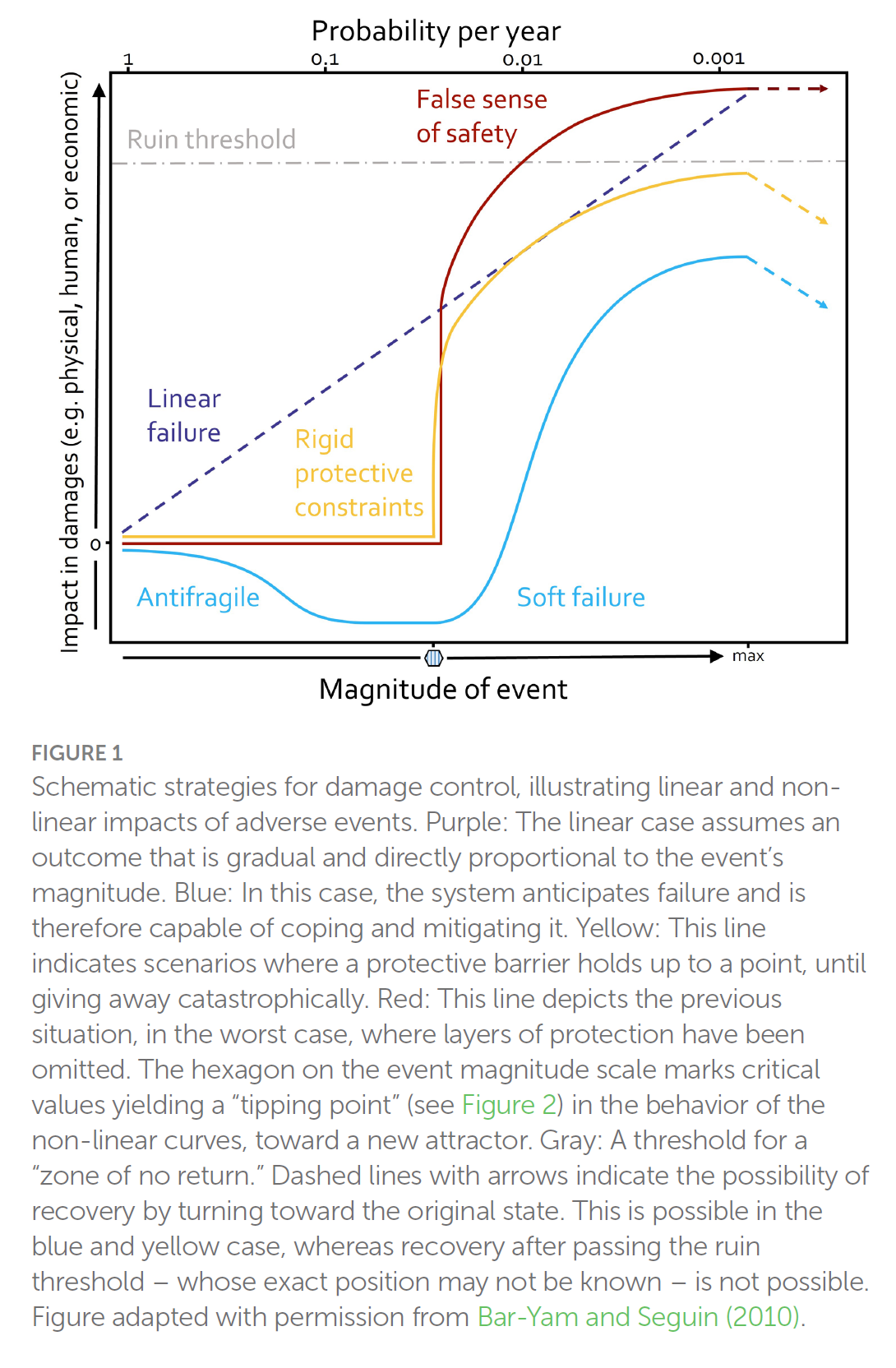
In the paper we first of all argue that we should understand so-called disaster myths, a prominent one being the myth of mass panic. This refers to the idea that people tend to lose control and go crazy during crises when they worry or fear too much, which implies we need to intervene on risk perceptions. But in fact, no matter what disaster movies or news reports show you, actual panic situations are rare. During crises, people tend to act prosocially. Hence, decision-makers should shift their focus from mitigating fear and worry – potentially leading to a false sense of safety – towards empowering communities to autonomously launch effective responses. This approach fosters resilience rather than complacency.
Decision Making Under Uncertainty: Attractor Landscapes
Secondly, we represent some basic ideas of decision making under uncertainty, via the concept of attractor landscapes. I now hope we would’ve talked about stability landscapes, but that ship already sailed. The idea can be understood like this: Say your society is the red ball, and each tile a state it’s in (e.g. “revolt”, “thriving”, “peace”, etc.) The society moves through a path of states.
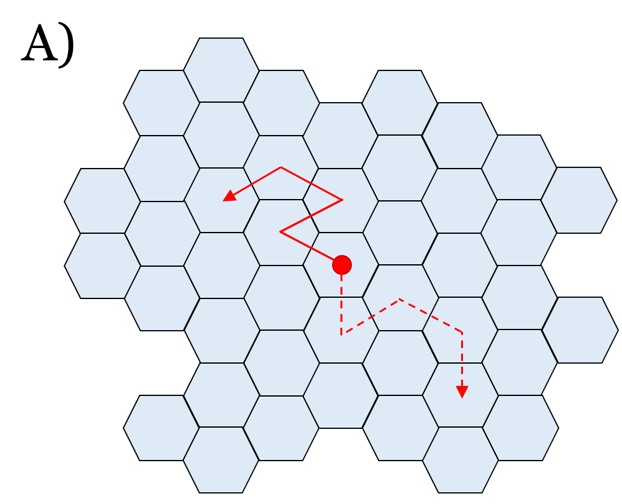
These states are not equally probable; some are more “sticky” and harder to escape, like valleys in a landscape. These collections of states are called attractors. The area between two attractors is a tipping point (or here, kind of a “tipping ridge”).
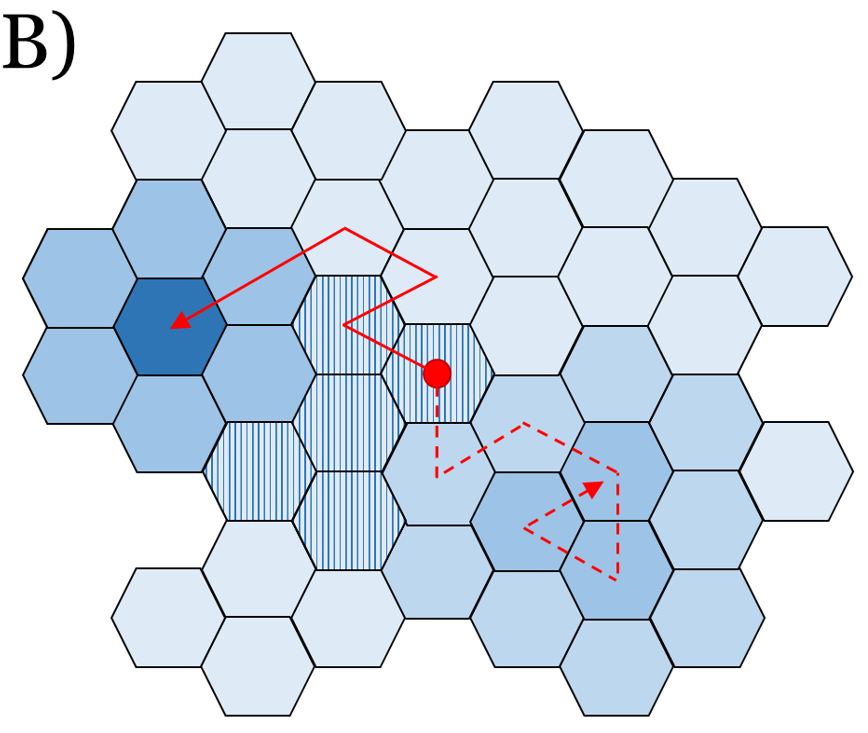
I wholeheartedly encourage you to spend five minutes on Nicky Case’s interactive introduction to attractor landscapes here. It’s truly enlightening. The main thing to know about tipping points: as you cross them, nothing happens for a long time… Until everything happens at once.
The Dangers of Ruin Risks
All attractors are not made equal, though. For some, when you enter, you’ll never escape. These are called “ruin risks” (orange tile). If there is possibility of ruin in your landscape, probability dictates you will eventually reach it, obliterating all future aspirations.
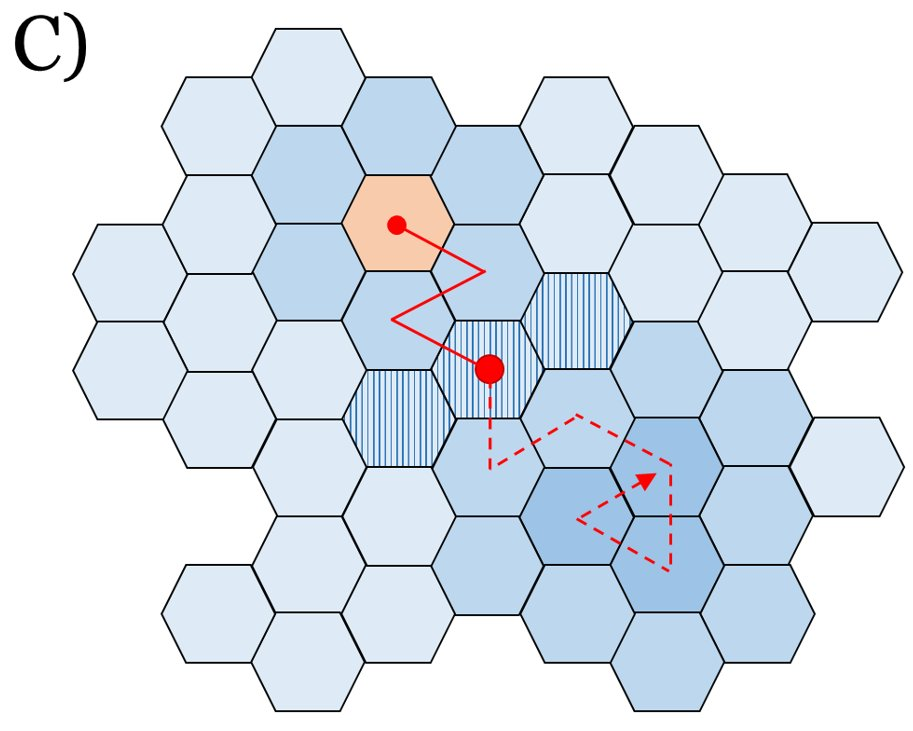
As a basic principle, it does not make sense to see how close to the ledge you can walk and not fall. In personal life, you can take ruin risks to impress your friends or shoot for a Darwin Award. But keep your society away from the damned cliff.
As Nassim Nicholas Taleb teaches us: Risk is ok, ruin is not.
Navigating the Fog of War
In reality, not all states are visible from the start. Policymakers often face a “fog of war” (grey areas). Science can sometimes highlight where the major threats lie (“Here be Dragons”), but the future often remains opaque.

To make things worse for traditional planning, as you move a step from the starting position, the tiles may change. So you defined an ideal state, a Grand Vision (yellow) and set the milestones to reach it? If you remain steadfast, you could now be heading at a dead end or worse. Uh-oh.

(nb. due to space constraints, this image didn’t make it to the paper)
This situation, described in Dave Snowden’s Cynefin framework, is “complex.” Here, yesterday’s goals are today’s stray paths, so when complexity is high, you focus on the present – not some imaginary future. The strategy should be to take ONE step in a favourable direction, observe the now-unfolded landscape, and proceed accordingly.
The Cynefin Framework and Complex Systems
Sensemaking is a motivated, continuous effort to understand connections (which can be among people, places, and events) in order to anticipate their trajectories and act effectively.
Sensemaking (or sense-making, as Dave Snowden defines it as a verb) refers to the attempt or capacity to make sense of an ambiguous situation in order to act in it. This is what we must do in complex situations, where excessive analysis can lead to paralysis instead of clarity.
Cynefin is a sense-making framework designed to enable conversations about such a situation, and offers heuristics to navigate the context. In the paper, we propose some tentative mappings of attractor landscape types to the Cynefin framework.
In general, our paper offers proposals for good governance, drawing from the science of sudden transitions in complex systems. Many examples pertain to pandemics, as they represent one of the most severe ruin risks we face (good contenders are of course wars and climate change).
By understanding the concepts illustrated here, policymakers could better navigate crises and build resilient societies capable of adapting to sudden changes.
If you want a deeper dive, please see the paper discussed in this post: At-tractor what-tractor? Tipping points in behaviour change science, with applications to risk management
NOTE: There’s another fresh paper out, this one in Translational Behavioural Medicine: How do behavioral public policy experts see the role of complex systems perspectives? An expert interview study. Could be of interest, too!
 ... And Out Come the Systems | Käyttäytymisarkkitehtuuri
[…] New paper: From a False Sense of Safety to Resilience Under Uncertainty […]
LikeLike
I once saw a draft paper from the Air Force regarding the notion of gross miss distances. Never saw a final version. I reference it in a Medium piece F-35C Crash into the South China Sea – A Case Study. Your graph showing the false sense of security crossing the ruinous threshold makes me think of it.
LikeLiked by 1 person
I found the (pretty long) piece and skimmed it. In doing that, I found a very quotable quote I was going to add here. Then I saw another, and another, and another… So I’m just going to just link the whole thing here so people reading this can go see for themselves:
View at Medium.com
LikeLike
You might also like Ron Butcher on Medium with Rethinking Safety – An Illusory and Context-Dependent Construct. Houda Boulahbel with Looking for the Missing Pieces in the Cancer Puzzle.
LikeLiked by 1 person
[…] reach out. My current research interests mainly revolve around risk management (see paper described here) – particularly, understanding and shaping communities’ capacities to respond, recover, and […]
LikeLike
[…] Nassim Nicholas Taleb puts it: Risk is acceptable, ruin is not (more in this post). And no individual human is capable of understanding our modern, interconnected environments […]
LikeLike
[…] The research I present explores the intersection of two scientific domains that might seem, at first glance, quite distant. But what I want to do is share why building bridges between complex systems and behaviour change is not merely an academic curiosity, but, as I argue in this work, a vital step towards deepening our understanding of human action in our increasingly interconnected world, and ultimately, towards building a more robust basic science of behaviour change. [Side note: you can find my perspective to what behaviour change is NOT here, and connections to risk management here and here.] […]
LikeLike